How T-Mobile uses Analyst Agent for skill-based compensation



“It’s what we all hoped agents would deliver: better, faster, more precise answers we can use for high-stakes decisions. We’re no longer reactive; we’re empowered.”


When a job doesn’t fit the mold, the comp questions get harder.
For Ardavan Khosravi, Compensation Market Research Manager, at T-Mobile, the hard comp questions never stop. How should we price this role? Where does it fit? What are these skills worth in the market?
Job descriptions were “creatively written,” packed with emerging skills and hybrid responsibilities that didn’t map cleanly to the company’s job architecture.
“Sometimes a JD wouldn’t fit the mold at all,” Ardavan says. “I had to figure out which skills mattered and whether the market paid a premium for them.”
The moment skills-based comp decisions slow down
Ardavan fields a steady stream of questions from analysts and business partners, and nearly all of them come down to translating a job description into T-Mobile’s structure and understanding what the skills inside that description are actually worth in the market.
That translation step is where confidence breaks.
Before Analyst Agent, every answer came with doubt.
Answering skills-based comp questions used to take hours.
Ardavan started with a generic GPT tool to extract skills, then moved into manual research. Googling unfamiliar terms, scanning job postings, comparing roles across the industry, and piecing together insights from sources that didn’t line up.
The output worked in a pinch, but it wasn’t something he could stand behind.
“There was always noise in the data,” he says. “I knew the methodology wasn’t strong enough for high-stakes decisions.”
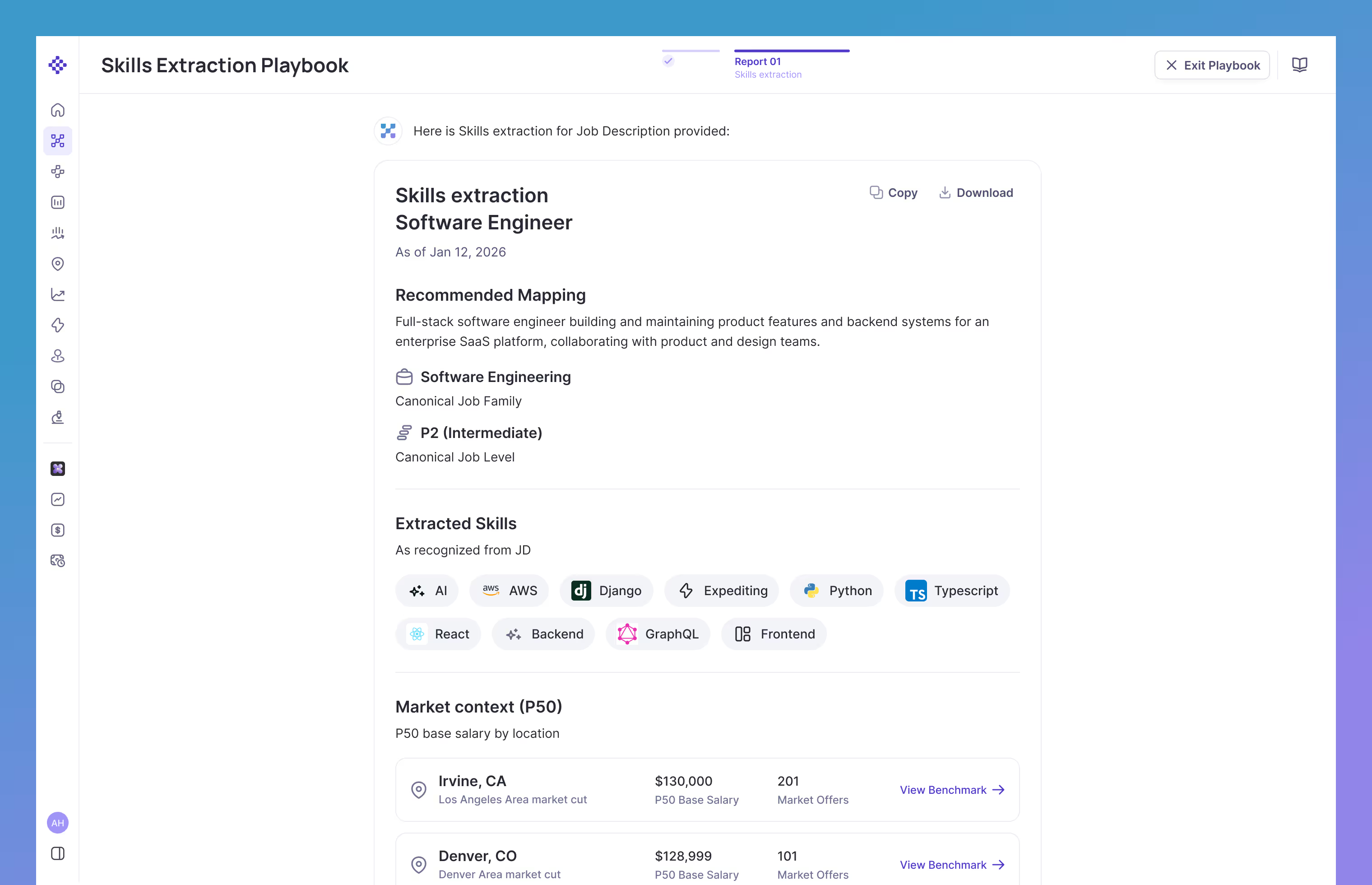
Analyst Agent replaced guesswork with a trusted starting point
Everything changed when the comp team adopted Analyst Agent.
Now Ardavan drops a job description into the agent and gets a clear readout in seconds. Skills are extracted directly from the JD, market premiums are tied to skills, benchmarks and leveling recommendations are surfaced, and suggested matches map back to T-Mobile’s job architecture.
“I finally have a place to start,” he says. “And I trust the data because it’s built on the same Compa dataset our team already relies on.”
Instead of patching together insights, Ardavan responds quickly with answers he can defend.
.avif)
Comp answers grounded in data, not guesswork
Analyst Agent cut manual research, improved pricing and leveling decisions, and delivered market answers that hold up with Finance, business partners, and the board.
“The difference is trust,” Ardavan says. “Analyst Agent uses the same Compa data our team already relies on. When I respond to the business, I know the answer is grounded in data, not guesswork.”
And that trust changes how the team operates.
“Having an agent built on Compa’s data gives me confidence when questions come in,” Ardavan says. “It’s what we all hoped agents would deliver: better, faster, more precise answers we can use for high-stakes decisions. We’re no longer reactive; we’re empowered.”