Consulting & Professional Services
AI Is Rewriting the Revenue-Per-Partner Model
As firms generate billions in AI advisory revenue, the traditional partner-to-consultant leverage model is shifting — and compensation architecture must evolve to protect the partnership.
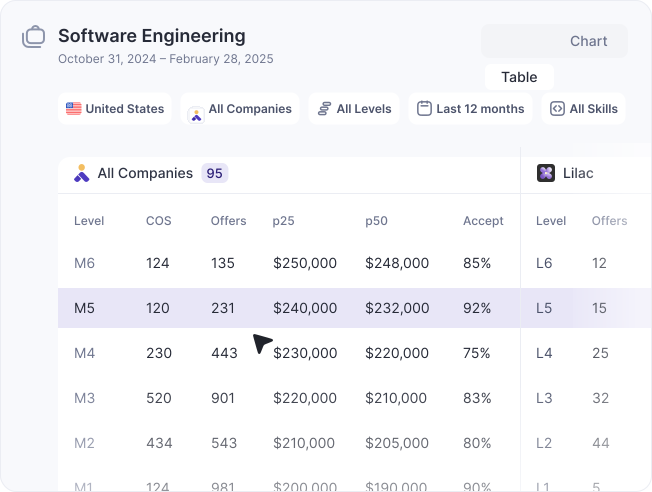




AI Advisory Revenue Is Concentrated in Senior Technical Partners
Frontier AI engagements are driven by a small cohort of senior partners, solution architects, and technical leaders. Revenue growth is increasingly dependent on a narrow slice of the pyramid.
AI Is Collapsing Junior Billable Leverage
AI-enabled delivery reduces reliance on traditional junior staffing while increasing demand for senior expertise. Revenue per partner rises — but so does volatility across practices and regions.

Don’t Lose the Partners Driving AI Growth
When a senior AI partner exits, revenue, client trust, and institutional knowledge leave with them.
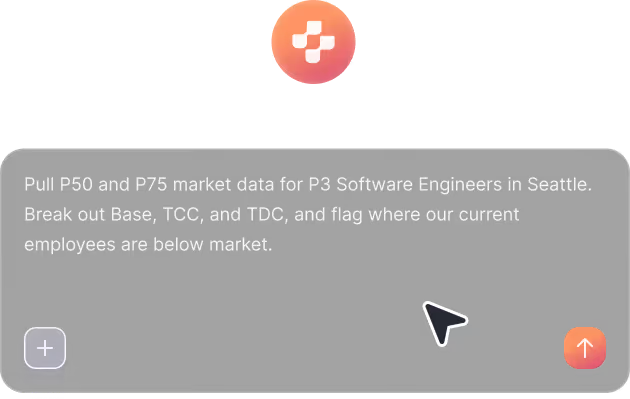
Leverage Compression Is Reshaping Engagement Economics
AI tools compress analysis, synthesis, and slide production. Traditional pyramids built on junior billable hours are flattening. Compensation models tied to legacy leverage ratios strain under this shift.
AI Growth Is Creating Partnership Tension
As AI practices grow faster than legacy service lines, pay dispersion widens. Draw mechanics, promotion velocity, and partner compensation committees face increasing internal pressure.
Hold the Partnership Together While AI Changes the Work
Global advisory firms are seeing record AI demand, but delivery economics are shifting. A small cohort of senior AI partners now drives disproportionate growth while junior leverage compresses.
If partner compensation lags, top AI revenue producers become retention risks. If premiums swing too far, internal equity fractures across practices.
Compensation discipline now determines whether AI strengthens — or destabilizes — the partnership.
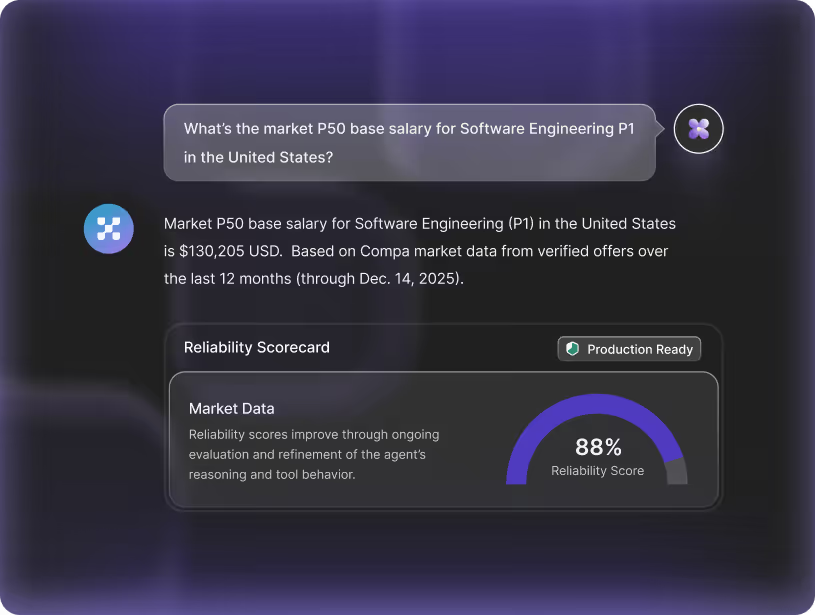
Trusted by Global Partnership Compensation Leaders

“It’s what we all hoped agents would deliver: better, faster, more precise answers we can use for high-stakes decisions. We’re no longer reactive; we’re empowered.”

“We believe Compa is one of those tools that will enable us to make multi-billion dollar business decisions with the highest degree of confidence.”


“Analyst Agent is groundbreaking in the compensation industry, I’m amazed.”