Benchmark hourly pay down to the zip code
Use location-specific market data to benchmark hourly jobs where you compete for talent.


“We’re losing talent because we find out too late that our competitor across the street increased wages.”
Hourly wages can vary from one zip code to the next, but MSA benchmarks treat the metropolitan area as one labor market.
A competitor opening nearby or increasing wages can change the local market without affecting the metro rate, making it hard to retain workers and hire competitively.

Across a large workforce, pricing to the metro area leaves some sites above market and others below it, creating hiring challenges and turnover.
Example: In the Boston–Cambridge–Newton MSA, the median frontline wage is $18.75, while central Boston reaches $25.77. A site priced to the metro median could fall nearly $7 per hour below its local market.
Seasonal hiring, local legislation, and nearby competitors shift wages before annual surveys update.
Compensation teams need current market data to identify local changes before they affect hiring and retention. Compa benchmarks hourly pay down to the zip code, so comp teams can price each site to their neighborhood.
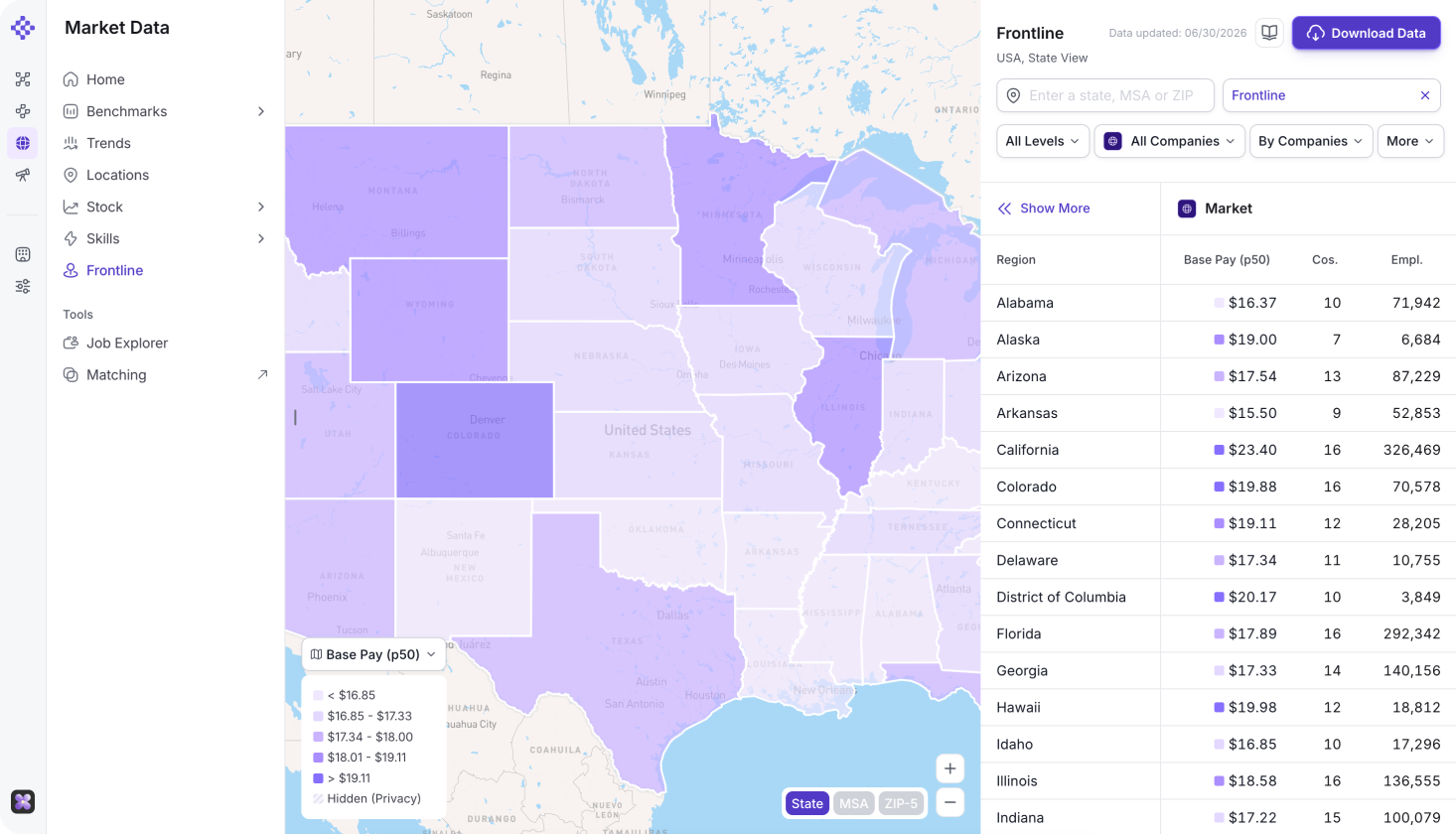
- Access benchmarks by zip code: Benchmark hourly base, annual base, and target total cash by role and zip code instead of relying on a blended metro rate.
- Compare local wages: Compare pay across zip codes within the same metropolitan area to identify local wage differences.
- Stay ahead of local pay changes: Use live local market data to see how a major employer's pay affects the local market.
- Identify minimum-wage differences: Identify where local minimum wage laws create different labor markets within the same MSA.
- Get frontline role coverage: Benchmark warehouse, retail, and pharmacy roles without buying multiple specialty surveys.
- Pricing locations using a broad MSA benchmark.
- Learning about competitor wage changes through turnover.
- Treating every zip code in a metro as the same labor market.
- Missing local wage differences hidden by municipal minimum wage laws.
- Buying separate surveys for warehouse, retail, and pharmacy roles.

Frontline Data