Benchmark skill premiums
Measure the premium for individual skills to make role-specific pay decisions.


“Survey matches are too general for emerging skills. We need a more accurate read on what the market pays for this expertise.”
Traditional survey job families can’t keep up with the market.
Candidates with the same job title and level can earn different pay based on their skills. An AI Engineer building self-driving systems has a different market rate than an AI Engineer training LLMs. Without visibility into skill premiums, matches are too broad leaving the comp team with inaccurate data.

Compensation benchmarks based on broad roles miss meaningful differences in market value.
Compensation teams risk overpaying for common roles, losing top talent, or defending exceptions they can't explain. Visibility into skill premiums leads to more consistent pay decisions and strategic talent investments.
New skills emerge before traditional surveys update their job architecture. AI skills and new programming languages can carry a market premium before the traditional surveys capture their value. Compa measures skill premiums from job descriptions for accepted offers across its network, giving comp teams a view of what skills get paid more in reality.
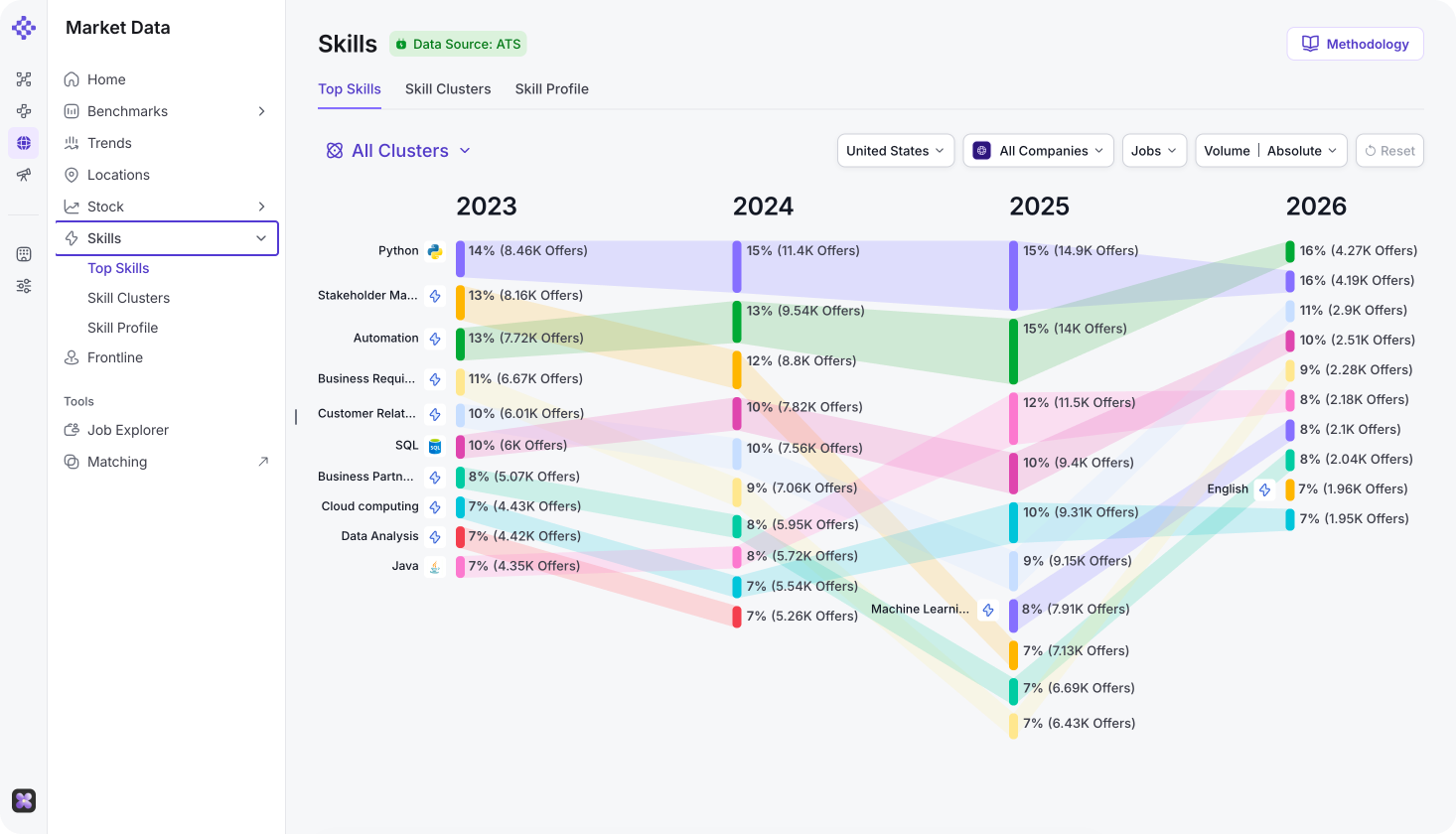
- Benchmark individual skills: measure the market premium for specific skills like “LLM development” or “Kubernetes”.
- Price specialized roles: benchmark roles based on the skills they require.
- Compare skill premiums across the market: analyze skill-based compensation across base salary, stock, offer volume, acceptance rate, and location.
- Overpaying for common roles and underpaying for specialized skills.
- Settling for a single survey match when one role spans multiple skill sets.
- Waiting for surveys to catch up to emerging roles.
- Relying on skill clusters that lag behind the market.
- Buying custom surveys to benchmark niche or emerging roles.

Skills Data