Going Deeper on Hourly Compensation: Why Zip Codes and Proximity Matter

Ashley Case
Director of Insights
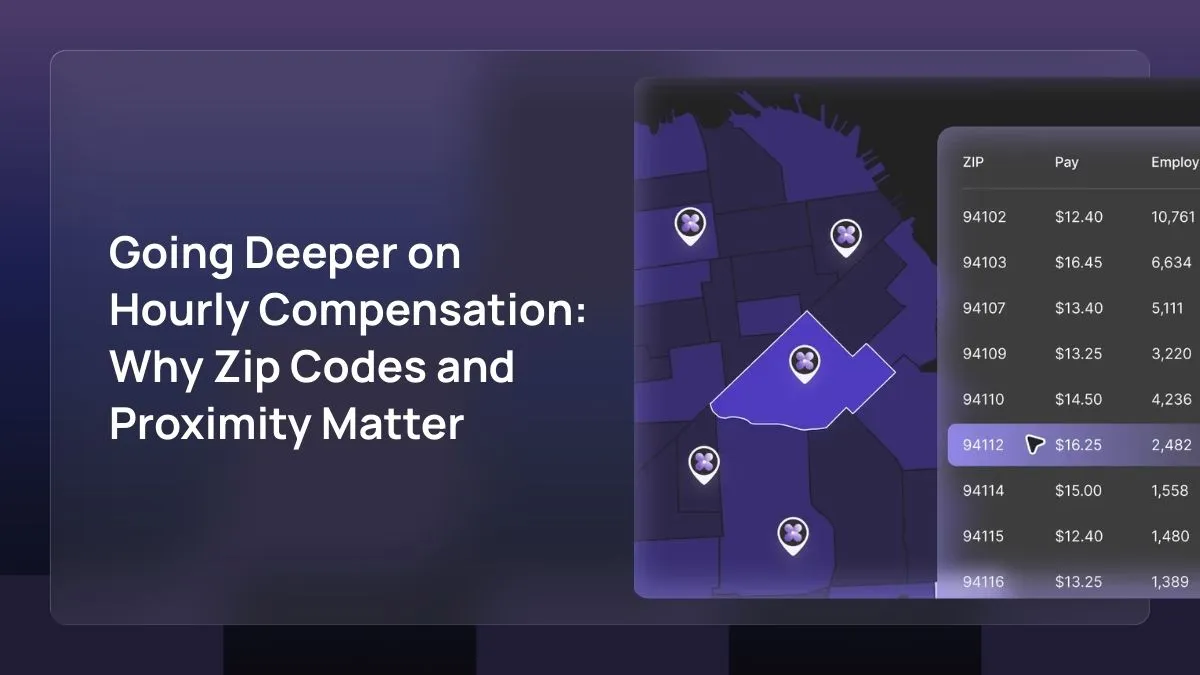
Within the same MSA, hourly wages can swing wildly by zip code.
Yet most pay strategies stop at the MSA level as if a metro area is one labor market.
It’s not.
That shortcut creates risk: overpay in some pockets, lose talent in others.
The trouble with MSAs
MSAs make benchmarking simple by bundling multiple labor markets into a single number and calling it “the market rate.”
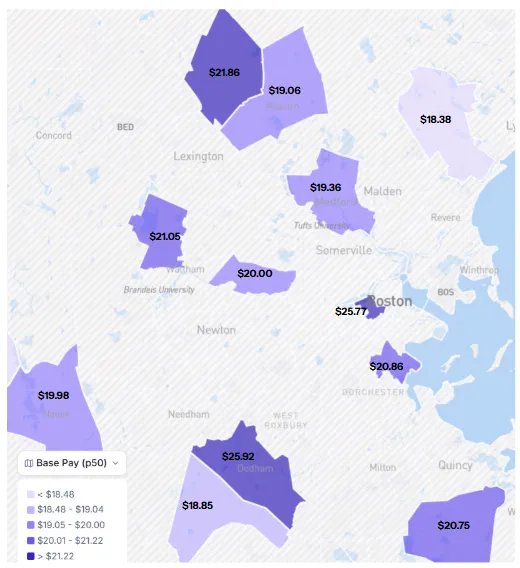
Take the Boston–Cambridge–Newton MSA. Median base pay for frontline roles is $18.75.
At the zip code level, wages range from $18.41 to $25.92 but in central Boston, median base pay is $25.77.
Price that role at the MSA average and you’re nearly $7 below the local market.
That’s not benchmarking, it’s guessing.
Understanding talent movement
Years ago, I worked for a company with call centers.
Our starting wage was competitive, until a new center opened down the street with a banner advertising $0.50 more per hour.
Overnight, the MSA rate didn’t matter but the sign down the street did.
Talent doesn’t compare MSAs, it compares commutes.
People will travel for higher pay but only if the wage clears the cost of getting there.
Chicago is a great example of this.
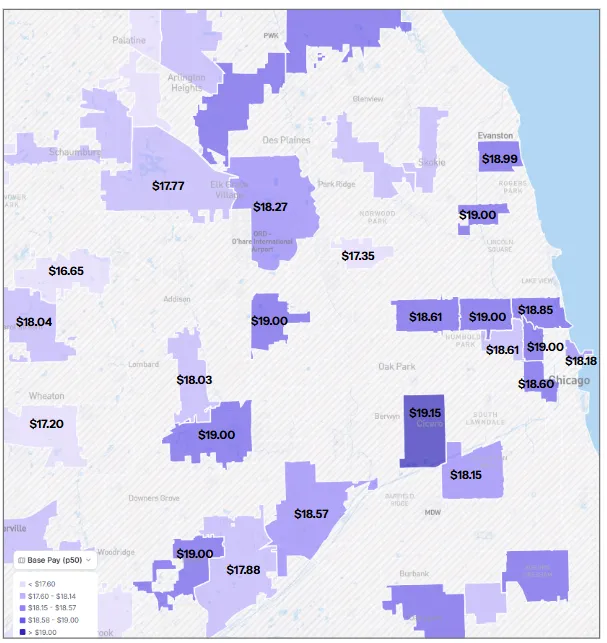
If you’re hiring downtown, base pay typically lands between $18.50 and $19.00.
Steps outside the city center and neighboring zip codes can differ by more than $1.00 an hour.
That gap drives movement.
When you’re setting pay, what the next zip code offers and how far it is matters more than a blended downtown average.
Other local pay factors
Other factors that influence pay at the zip code or local level include,
- Commercial vs residential proximity: Locations near logistics hubs, retail and industrial corridors, and hospitals can command higher hourly rates than residential areas
- Talent availability: When employees can’t find or afford housing/transportation near their workplace, a premium may be required to support the longer commute.
- Municipality minimum wage: Variations in minimum wage at the city or county can impact wages
In Portland - Vancouver - Hillsboro MSA, which spans Oregon and Washington municipalities, median entry level (S1) wages vary from $16.32 to $19.30. At the low end, median hourly pay in an Oregon zip code falls below Washington’s minimum wage requirements, adding complexity to pay variance within MSAs.
Approaches for setting frontline pay
Understanding the nuance of local data, how should companies think about setting compensation for new and existing locations? Here’s a few ways:
In hourly hiring, local data makes or breaks your compensation strategy.
Talent movement and other local pay factors can create considerable wage differences from one zip code to the next - in the example of the Boston - Cambridge - Newton MSA, the highest paid zip code is 38% higher than the MSA median. By leveraging local wage data beyond the MSA-level, pay strategies can better attract and retain frontline staff.
Want to dig in deeper? Join my webinar, Cracking the Code on Frontline Compensation to learn how top comp teams are solving frontline pay and fungibility problems that have held hourly roles back for years.
Data Source:
Compa Frontline, S1 and S2 level in-store retail roles. As of 11/12/2025.