Why top tech talent is slipping away: AI/ML Compensation Strategy Tips
Your compensation framework might be costing you top talent.
AI/ML Engineering roles are reshaping industries. Yet most companies rely on outdated job architectures that can't keep up with the rapid evolution of technical skills. This disconnect doesn’t just cost you talent—it drains resources and slows your growth.
The cost of inaction is mounting
Your competitors are hiring top AI talent while you struggle to catch up:
- Rigid pay bands frustrate engineering managers who know market realities have shifted
- HR teams lose valuable time trying to justify compensation for skills they can’t properly classify or value
- Talent loss accelerates as high-demand candidates turn to companies willing to pay for their expertise
The solution? Rethink compensation with skill-based pay premiums while keeping your current framework intact.
5 things you can do right now
Here’s how to stop losing top talent and start moving faster:
Reevaluate your strategy: Identify critical skills that drive business outcomes. Example: If AI is mission-critical, prioritize TensorFlow expertise in your engineering hires.
Target your premiums: Link eligibility to impact. A senior engineer’s PyTorch mastery delivers more value than the same skill at entry level.
Price it right: Use market data to guide pay premiums based on proficiency—e.g., 10% for basics, 20% for proficiency, 30% for mastery in skills like Computer Vision.
Equip your recruiters: Provide clear skill evaluation criteria and tools to identify top talent faster.
Speed up decisions: Set thresholds for pay premiums and simplify approval processes to move quickly on strong candidates.
Why this matters for AI/ML roles
AI/ML talent is in high demand, and your ability to attract them depends on how well your pay strategy reflects market realities.
In our latest analysis of 4,500 AI/ML offers, we uncovered clear trends in cash and equity compensation that highlight the need for skill-based pay strategies:
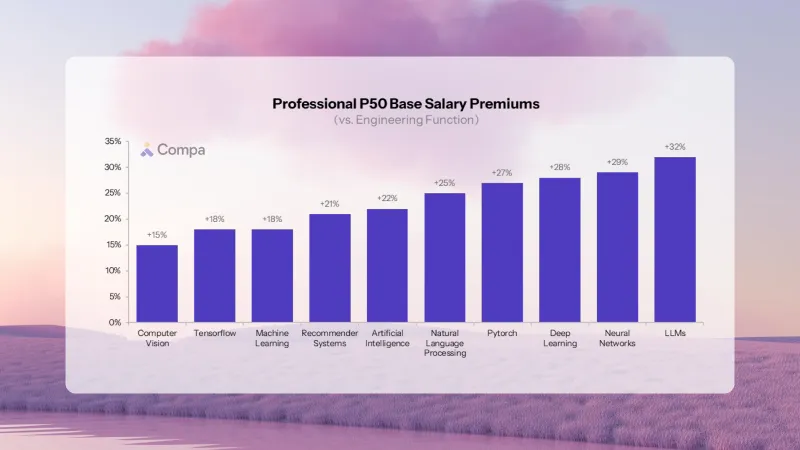
- Professional-level AI/ML roles command significant base salary premiums over general Engineering positions, with skill-specific variations
- New hire equity grants show high premiums—ranging from +88% for Computer Vision to +181% for Neural Networks
- Cash and equity premiums are closely tied to skill prevalence in the market, requiring a balanced strategy to attract and retain top talent.
The bottom line
Upgrading your compensation framework with skill-based pay premiums isn’t a luxury—it’s a necessity. By prioritizing critical skills, aligning premiums to impact, and moving quickly on strong candidates, you’ll turn compensation into a competitive advantage.
Want to dive deeper into skills-based compensation trends in tech? Check out our market brief here.
.webp)