Health
AI Is Reshaping Drug Discovery Faster Than Compensation Can Stabilize It
From AI-driven molecule design to compressed clinical timelines, life sciences organizations are accelerating R&D — while compensation governance struggles to keep pace with scientific talent volatility.
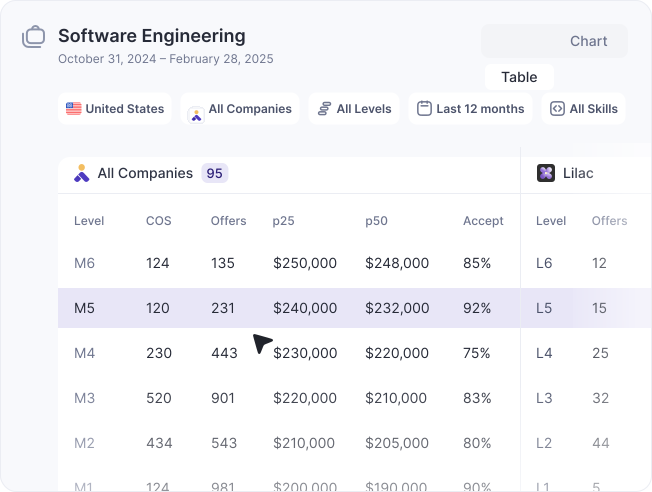




Your R&D Pipeline Is Constrained by Talent
Bioinformatics leaders, computational chemists, and translational AI scientists are being recruited by biotech startups, AI-native labs, and adjacent industries with aggressive cash and equity offers.
Speed to Trial Is a Compensation Variable
AI is accelerating target identification, biomarker modeling, patient stratification, and adaptive trial design. When scientific roles move faster than pay architecture, R&D continuity — and time to approval — suffers.

Retention Risk Lives in the Lab
When a principal scientist or computational lead exits, institutional knowledge, trial assumptions, and model architecture leave with them.
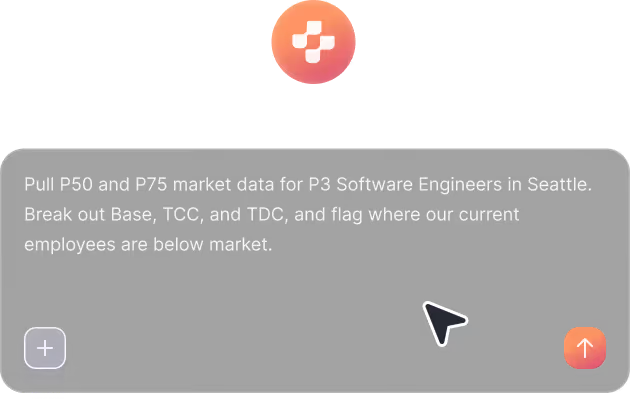
AI-Driven Discovery Is Repricing Talent
Molecule generation models, digital twins, and predictive toxicology platforms are compressing early-stage discovery timelines. Compensation programs built for traditional wet-lab hierarchies struggle to accommodate hybrid AI-science roles.
Phase III Concentrates Financial Risk
When AI accelerates early R&D but governance lags, misaligned incentives can distort trial design, inflate expectations, and amplify the financial exposure of late-stage failures.
Protect the Pipeline by Stabilizing Talent
Life sciences firms face converging pressures: post-pandemic revenue normalization, patent cliffs, disruptive therapies, and tighter regulation.
Meanwhile, AI-enabled discovery is reshaping roles.
Compensation must attract scarce AI talent, retain IP-critical leaders, avoid pay compression, and stay defensible—or risk pipeline fragility.
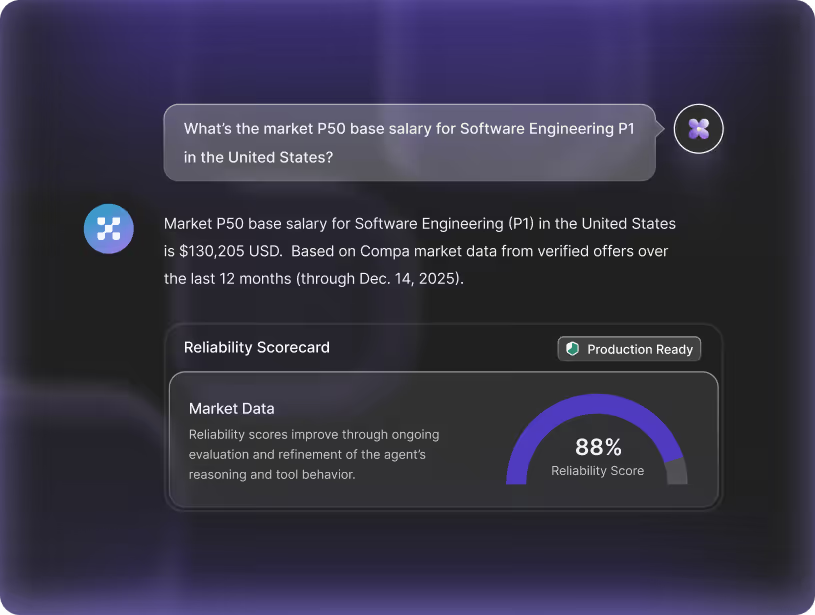
Where Life Sciences Compensation Leaders Turn

“It’s what we all hoped agents would deliver: better, faster, more precise answers we can use for high-stakes decisions. We’re no longer reactive; we’re empowered.”

“We believe Compa is one of those tools that will enable us to make multi-billion dollar business decisions with the highest degree of confidence.”


“Analyst Agent is groundbreaking in the compensation industry, I’m amazed.”