Know where incumbents stand before comp planning
A continuously refreshed incumbent benchmark on a 90-day lag — so you're always looking at where the market is, not where it was a year ago.


"Is our market data current enough to inform sound merit adjustments?"
Most teams accept that survey data is as current as it can be, but incumbent benchmarking built on a six-month-old survey is a known limitation. The market moved and the data didn't. Compa Employees gives a continuously refreshed benchmark for incumbents.

Comp cycles built on lagged benchmarks create a pattern: new hires come in at market and incumbents drift below it. The gap compounds until attrition or a formal equity review forces a correction. By the time the data shows a gap, it's been there a while.
Employee benchmarking should be continuous, not annual. Compa Employees refreshes on a 90-day lag, so benchmarks reflect the last quarter, not the last year. Comp planning for certain geos, roles, or teams could be refreshed quarterly.
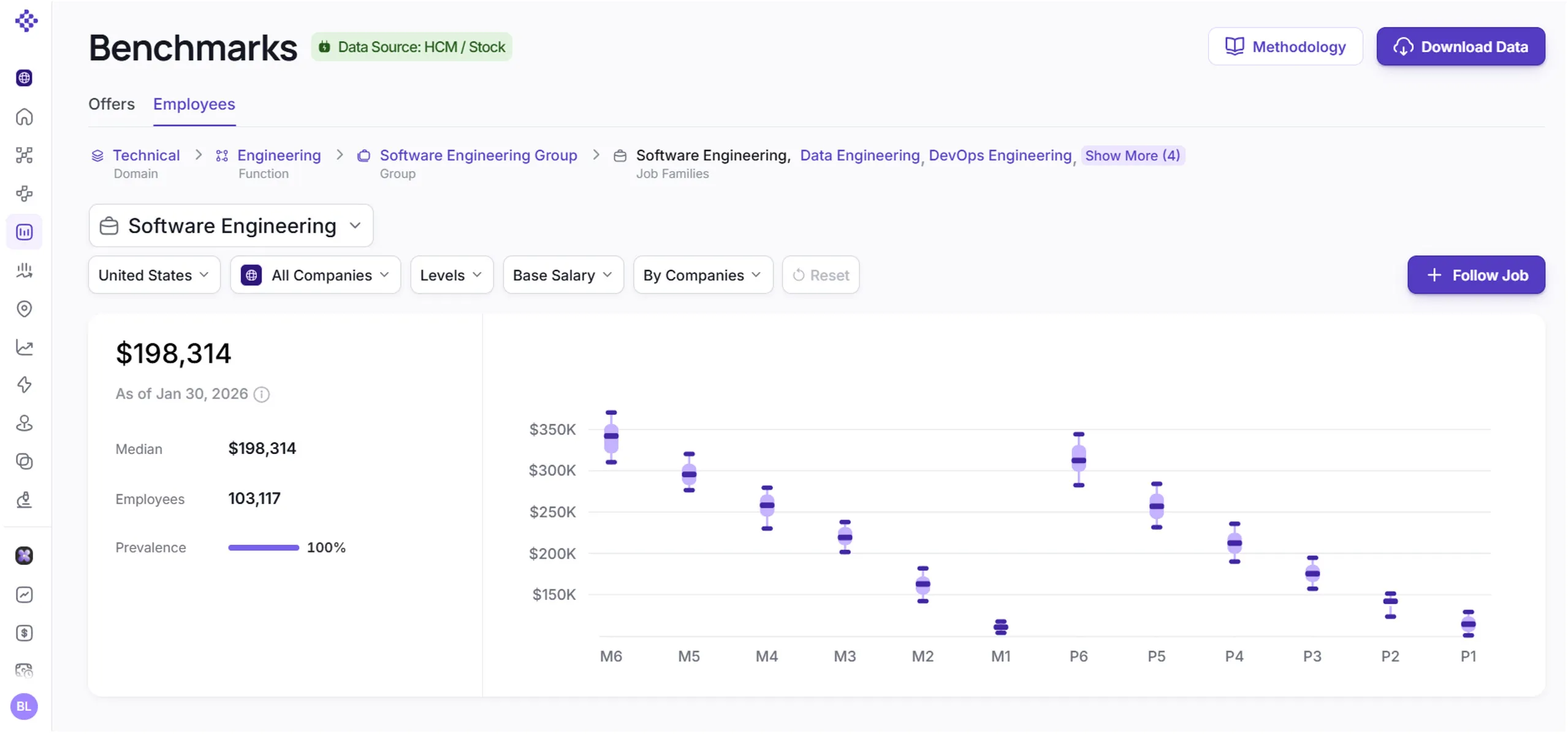
- Continuously refreshed benchmarks on a 90-day lag.
- Population-level views by role, level, and geo.
- A blend of offer and employee data with the leading indicator and the baseline together.
- Offer-to-incumbent ratio by role and geo to signal a heating or cooling market.
- Compa-ratio analysis that is grounded in current data before the cycle opens.
- A clear view of where to act and where the program is holding steady.
- Building a blended model from scratch each cycle.
- Manually calculating compa-ratios against a midpoint that may no longer reflect the market.
- Spot checking high-visibility roles while the rest of the population goes unreviewed.
- Starting the cycle without knowing whether the program has drifted since last year.
- Using smoothing rules and adjustment factors to compensate for data gaps.

Employees Data